A metaphor-based robot programming approach to facilitating young children’s computational thinking and positive learning behaviors
Abstract
In the artificial intelligence age, cultivating young children’s computational thinking (CT) has sparked tremendous attention. Programmable robotics is a developmental-appropriate and screen-free means that provides young children with great opportunities to learn programming and develop CT. However, it is reported that young children might have difficulties learning abstract CT concepts. As a helpful pedagogical facilitator, metaphors can help turn abstract concepts into more concrete and clear concepts that learners are familiar with. Therefore, this research proposed a metaphor-based robot programming (MRP) approach and explored its impact on young children’s CT and behavioral patterns. A total of 118 children aged 5-6 were recruited in this experiment with two conditions: the experimental group adopted the metaphor-based robot programming (MRP) approach while the control group used the conventional robot programming (CRP) approach. Results revealed that children who adopted the MRP approach outperformed children who adopted the CRP approach on CT. In addition, behavioral analysis indicated that the proposed MRP approach could facilitate children’s superior learning performance and more positive learning behaviors, so as to help them achieve learning objectives. Accordingly, this study can provide insightful guidance and inspiration for future research on effective programming teaching and CT development for young children.
Keywords: Teaching/learning strategies; Improving classroom teaching; Pedagogical issues; Interactive learning environments; Metaphors; Computational thinking; Early childhood education
1. Introduction
In the artificial intelligence era, computational thinking (CT), an essential digital competence for everyone, has received tremendous attention (Bers, 2019; Grover & Pea, 2013). CT refers to a thinking skill that draws on basic computer science concepts to solve not only technological problems but also real-life problems (Wing, 2006). Globally, CT has been integrated into the K-12 curriculum in the United States, the United Kingdom, Finland, China, and other countries (Angeli & Giannakos, 2020; Heintz et al., 2016). Recent works have verified that early exposure to CT could predict STEM subject learning (Sun et al., 2022), executive functions (Arfé et al., 2020; Di Lieto et al., 2017), 21st-century competencies (Bers et al., 2019; Lye & Koh, 2014), and even future career paths (Bati, 2021). As early childhood is a critical stage for children’s growth and learning (Piaget, 1953, 1971), it is essential to cultivate young children’s CT.
Programming has been reckoned as the primary and most effective means to promote learners’ CT (Bers, 2018; Macrides et al., 2022; Relkin et al., 2021). Today, with the advancement of robotics technologies, educational robotics is increasingly applied to the educational field (Zhang et al, 2023a,b). Programmable robotics, a screen-free and developmental-appropriate means, provides early-year children with great opportunities to access programming and CT (Bakala et al., 2021; Critten et al., 2021; Relkin et al., 2021). In recent years, researchers have used programmable robotics to teach children programming, and have validated its effectiveness in terms of developing children’s CT (Bers et al., 2014; Critten et al., 2021; Yang et al., 2022). Bers et al. (2019) indicated that 3-year-old children could acquire basic CT through learning robot programming.
In early childhood education, conventional robot programming teaching commonly adopts the narration-based approach, in which teachers introduce the CT concepts and the usage of programming instructions by narration, and then assign corresponding tasks to invite children to create programs and drive robots to achieve a goal (Bakala et al., 2021; Fu et al., 2023; Macrides et al., 2022; Relkin et al., 2021). That is, teachers mainly focus on introducing abstract CT concepts and the programming instructions, and then encourage children to write their programs without providing guiding strategies to help them combine the abstract CT concepts with concrete concepts that they are already familiar with (Bakala et al., 2021). As a consequence, researchers have found that young children generally have challenges in grasping some abstract CT concepts such as algorithm/sequence, representation, loops, and debugging, during the programming learning process (Bers et al., 2014; Critten et al., 2021; Hwang et al., 2022; Kwon et al., 2022; Relkin et al., 2021; Rijke et al., 2018). As Piaget (1971) implied, the conceptual constructions of children at ages 2-7 rely on more concrete and familiar experiences. Learning Transfer of Constructivism also requires learning transfer by connecting existing learning experiences and knowledge with target abstract concepts (Duffy & Jonassen, 1991; Prenzel & Mandl, 1993). The problem mentioned above could result from a lack of appropriate approaches to teaching young children robot programming (Pérez-Marín et al., 2018; 2020). Scholars have indicated that appropriate pedagogy plays a significant role in developing children’s CT (Angeli & Giannakos, 2020; Bers, 2019). As research on robot programming and CT in early childhood education is still in its infancy (Relkin et al., 2021), it remains an open issue to develop an age-appropriate approach to teach young children robot programming and develop their CT.
The conceptual metaphor theory (CMT) indicates that metaphors allow individuals to make connections between relatively abstract areas of experience with simpler or clearer experiences we are familiar with (Lakoff & Johnson, 1980; Lakoff, 1993). Indeed, it is a process of building linkages between the concrete and the abstract ideas (Saban, 2006). In educational fields, metaphors can be an effective tool to enable teachers to use more concrete and familiar concepts related to learners’ experiences to interpret abstract concepts, so as to help them develop a more concrete and straightforward understanding of the targeted concepts (Pérez-Marín et al., 2020; Saban, 2006; Yee, 2017). Previous works have validated the effectiveness of the use of metaphors in teaching language, mathematics, and biology (Bas & Gezegin, 2017; Reinhardt, 2020; Thomas & McRobbie, 2001; Yee, 2017). In addition, researchers have applied metaphors in programming teaching for college students (Milner, 2010), upper-secondary students (Larsson & Stolpe, 2022), and primary students (Pérez-Marín et al., 2018). Pérez-Marín et al. (2020) further verified the effectiveness of using metaphors to teach Scratch programming for promoting fourth to sixth grade primary school students’ CT. As we can see, the provision of metaphors in programming teaching showed great potential to develop learners’ CT. Some scholars (Angeli & Giannakos, 2020; Manches et al., 2020; Peelle, 1983) also pinpointed the significance of using learner-centered metaphors in programming teaching to develop children’s CT. Peelle (1983) mentioned that metaphors are particularly useful at an early stage of computer science learning: they make connections to concepts that are already well understood. However, the impact of metaphors in robot programming learning on young children’s CT has not yet been discussed. Considering this limitation, this study attempted to integrate metaphors into robot programming to propose a metaphor-based robot programming (MRP) approach to developing young children’s CT.
In addition, Bers et al. (2019, 2022) emphasized the importance of exploring children’s learning behaviors in technology-enhanced learning contexts, particularly in robot programming learning. As children tend to perform different learning behaviors under different teaching approaches (Sun et al., 2021; Zhan et al., 2022), analyzing and comparing children’s learning behaviors can not only provide qualitative data to evaluate the effectiveness of the proposed teaching methods (e.g., children under effective teaching methods tend to perform more positive learning behaviors), but also provide references for educational researchers to formulate more effective pedagogical approaches or strategies (Hwang et al, 2017, 2021). However, current research on exploring young children’s learning behaviors in programming learning is sparse. Therefore, this study further explored the impact of the MRP approach on young children’s behavioral patterns. We hypothesized that children who adopted the MRP approach would better enhance their CT and exhibit more positive learning behaviors. The main research questions of this study are as follows:
Does the MRP approach better promote young children’s CT than the conventional robot programming (CRP) approach?
Does the MRP approach better promote young children’s positive learning behaviors than the CRP approach?
2. Literature Review
2.1 Computational thinking for young children
Papert (1980) first introduced CT in his book, Mindstorms: Children, Computers, and Powerful Ideas. He developed the LOGO programming language and discussed the challenge of incorporating computer science education into a playful setting to improve children’s problem-solving skills. Later, Wing (2006) first explicitly defined the term CT and popularized it. She emphasized the significance of CT for children and stated that it is as important as reading, writing, and arithmetic. Moreover, several attempts have made CT more specific (e.g., Brennan & Resnick, 2012; CSTA, 2011; Grover & Pea, 2013). For example, Brennan and Resnick (2012) divided CT into a three-dimensional framework consisting of CT concepts, CT practices, and CT perspectives. Bers (2018) concentrated on young children’s CT and proposed seven powerful ideas: hardware/software, algorithm, representation, debugging, modularity, control structure, and design process. Despite the numerous different definitions of CT, the problem-solving nature of CT in technological and real-world problems has gained widespread recognition (Bers et al., 2018; Wing, 2006; Yang et al., 2022).
In recent years, cultivating young children’s CT has sparked increasing attention. Recent works have shown that early-year CT education is associated with STEM subject learning (Sun et al., 2022), executive functions (Arfé et al., 2020; Di Lieto et al., 2017), 21st-century competencies (Bakala et al., 2021; Bers et al., 2019; Lye & Koh, 2014), and even future career paths (Bati, 2021). As human society is becoming increasingly intelligent, early-year CT education can not only be good preparation for their following technological learning and even other subject learning, but can also help them better solve complicated problems in the future (Yang et al., 2022; Zhan et al., 2022). Early childhood is a critical period for children’s development and learning (Piaget, 1971); therefore, cultivating young children’s CT should be highly emphasized.
2.2 Robot programming and computational thinking for young children
In recent years, several studies have verified that programming is the most effective means to promote learners’ CT (e.g., Bers, 2018; Macrides et al., 2022; Relkin et al., 2021). The rapid advancement of smart technologies promotes the rise of educational robotics (Zhang et al, 2023a, b). Programmable robotics was designed as a developmental-appropriate tool to teach children programming and develop their CT (Bakala et al., 2021; Critten et al., 2021; Relkin et al., 2021). In addition, robot programming tends to be designed according to the principle of a low floor (the ability for children to program without professional training). Compared with screen-based programming, robot programming can not only protect children’s visual health but also reduce their cognitive load (Bers et al., 2014; Fu et al., 2023). More importantly, robot programming provides young children with great opportunities to interact with tangible objects in a playful learning context to foster their CT (Bakala et al., 2021; Yang et al., 2022; Zhan et al., 2022). Based on Papert’s (1980) constructionism, children can learn by manipulating technology and creating their own projects where they can express ideas, think, and formulate solutions. Research has identified the applicability and positive benefits of robot programming in developing CT for young children (Bers et al., 2019; Fu et al., 2023; Yang et al., 2022). For example, Bers et al. (2019) confirmed that children could achieve high-level CT through the KIBO robotic kit. Fu et al. (2023) and Yang et al. (2022) revealed the positive benefits of Matatalab robot programming to early-year children’s CT. Bers et al. (2019) also revealed that through the KIBO robot programming curriculum, children’s positive behaviors of communication, collaboration, and creativity could be greatly promoted. As such, robot programming can be an age-appropriate and effective means to promote young children’s CT and positive learning behaviors.
For the pedagogical approach of robot programming to foster children’s CT, Bers (2019) proposed a “Coding as Another Language” approach for early childhood computer science, grounded on the principle that the process of learning the program may be akin to learning a new language for communicative and expressive functions. In addition, Bers et al. (2019) proposed a “Coding as a playground” approach for teaching children programming and developing their CT as well as promoting children’s positive behaviors based on the KIBO robotic kit. Moreover, according to the review work of Bakala et al. (2021) and Macrides et al. (2022), most studies used a narrative approach in robot programming education. It can be seen that conventional robot programming teaching commonly adopted the narration-based approach where teachers introduce the CT concepts and the usage of programming instructions by narration, and then assign corresponding tasks to invite children to create the program and drive robots to achieve a goal (Bakala et al., 2021; Macrides et al., 2022; Relkin et al., 2021). However, young children still have challenges in grasping some abstract CT concepts, such as algorithms, loops, and debugging (Bers et al., 2014; Critten et al., 2021; Hwang et al., 2022; Kwon et al., 2022; Relkin et al., 2021; Rijke et al., 2018). This problem has not yet been well addressed in previous research.
Relkin et al. (2021) mentioned that the stage of children’s development can constrain the acquisition of CT. Piaget’s (1971) developmental stages proposed that young children are primarily in the preoperational stage or transiting from the preoperational stage to the concrete operations stage. Specifically, at the preoperational stage (ages 2-7), it is not yet possible for young children to conceptualize abstractly, and their conceptual knowledge constructions are dependent on more concrete and familiar experiences to represent abstract concepts. As Heintzet al. (2016) indicated, children need clear, careful, and well-focused thinking to learn programming. As such, there is a further need to propose an age-appropriate pedagogical approach to teach young children robot programming and develop their CT.
2.3 Metaphors
The conceptual metaphor theory (CMT) indicates that conceptual metaphors are employed in everyday life and play a crucial role in an individual’s thinking process (Lakoff & Johnson 1980; MacCormac, 1990). Metaphors allow learners to make connections between relatively abstract areas of experience (target domains) with more concrete experiences we are familiar with (source domains) (Lakoff & Johnson, 1980; Lakoff, 1993). Metaphors involve the source domain and the target domain, where the source domain is the projection of the target domain (MacCormac, 1990; Saban, 2006). For example, in the sayings “life is a journey” and “life is a play,” the “journey” and “play” metaphors were used to help learners better understand the different interpretations of abstract “life” concepts. The essence of metaphors is to resort to well-known concepts to describe what we are unfamiliar with (MacCormac, 1990; Saban, 2006). It is indeed a process of building linkages between the concrete and the abstract ideas (Saban, 2006). In educational fields, metaphors can be an effective facilitator to connect abstract concepts into concrete and familiar concepts that are relevant to students’ life and learning experiences (Fain, 2001; Silvestre-López, 2022). For educational researchers and practitioners, the selection of metaphors should closely link with the learner’s daily life contexts or learning knowledge that has already been well understood (Lakoff, 1993; Peelle, 1983; Saban, 2006). Until now, several researchers have used and validated the effectiveness of metaphors in a variety of subject teachings, such as language, mathematics, and chemistry (Bas & Gezegin, 2017; Reinhardt, 2020; Thomas & McRobbie, 2001; Yee, 2017). Their results revealed that metaphors can help students better acquire the corresponding concepts and promote their learning performance.
In addition, metaphors have been applied to teach programming (Milner, 2010; Pérez-Marín et al., 2018; 2020). Milner (2010) conducted a study using the EventListener metaphor in programming teaching and verified its effectiveness in helping college students understand the mechanism of Java event handling. Pérez-Marín (2018) proposed a methodology proposal based on metaphors to teach children basic CT concepts, such as a recipe as a program and sequence, a pantry as the memory, and boxes as variables. In addition, Pérez-Marín et al. (2020) further validated its effectiveness in developing CT for primary school students from fourth to sixth grades based on the Scratch programming environment. However, this study lacked a control group to make a comparison with the metaphor-based programming teaching. In addition, some researchers also emphasized the importance of using learner-centered metaphors in programming teaching to develop children’s CT (Angeli & Giannakos, 2020; Manches et al., 2020). Peelle (1983) mentioned that metaphors are particularly useful at an early stage of computer science learning: they make connections to concepts that are already well understood. From the perspective of children’s cognitive development, young children are better able to construct knowledge through concrete things or existing constructed ideas (Feldman, 2004; Piaget, 1953, 1971). Learning Transfer of Constructivism also requires learning transfer by connecting existing learning experiences and knowledge with target abstract concepts (Duffy & Jonassen, 1991; Prenzel & Mandl, 1993). As we can see, metaphors can be an age-appropriate approach for programming learning, which can connect abstract CT concepts into concrete and familiar concepts that are relevant to children’s life and learning experiences. It shows great potential for promoting young children’s learning performance in programming problem-solving tasks and developing their CT. To date, metaphors have been used in programming teaching to enhance older age groups’ CT (e.g., college students and primary school students), while the applicability of metaphors in programming teaching for developing early-year children’s CT has not yet been discussed. Therefore, this study integrated metaphors into robot programming learning and proposed a metaphor-based robot programming approach to developing young children’s CT.
3. Development of the metaphor-based robot programming (MRP) approach
3.1 The MRP learning environment
The Matatalab programming kit was used as the learning environment in this study (Fig. 1). Matatalab is a screen-free programmable robot kit designed for 4-9-year-old children; it includes a programmable robot (MatataBot), command tower, control board, and programming blocks. The MatataBot can be programmed with tangible programming blocks: the child places the programming blocks, then presses the launch button embedded in the control board, and the command tower scans and recognizes all blocks and transmits the signals to the MatataBot to execute the corresponding commands on the map. Each block represents an action or command that the MatataBot performs. The Matatalab programming kit can empower children to learn basic programming and CT concepts, explore robot programming problem-solving tasks, and develop CT (Fu et al., 2023; Yang et al., 2022).
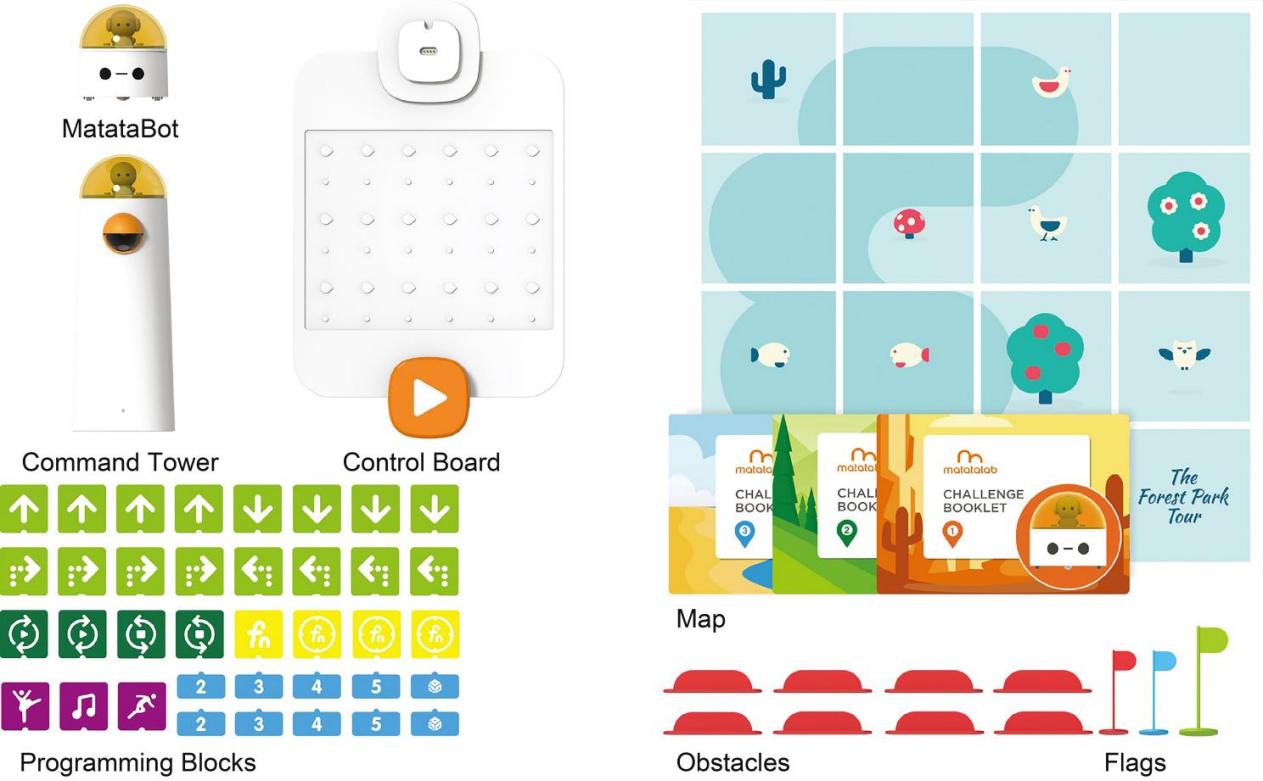
Fig. 1 The Matatalab programming kit
3.2 The curriculum with the MRP approach
The robot programming curriculum consists of ten 40-minute activities, with one activity per week. Children were divided into small groups. Two children had a Matatalab programming kit. The curriculum is called “The Journey to Nature.” The main learning objectives of this curriculum are: (1) Children can understand and master CT concepts, including hardware/software, algorithms, modularity, debugging, representation, and so on; (2) Children can master the symbolic representations of basic programming blocks through study and practice: move forward, move backward, turn left, turn right, numbers, loop, and so on; (3) Children can combine different programming modules (motion, numbers, and loop) and use basic CT concepts to solve problems; and (4) Children can experience the fun of robot programming.
This robot programming curriculum was systematically developed based on the CT framework for young children by Bers (2018). Previous studies mentioned that young children generally have challenges in grasping some abstract CT concepts, such as algorithms/sequence, representation, loops, and debugging, while other concepts can be grasped under the conventional context of robot programming learning (Bers et al., 2014; Critten et al., 2021; Kwon et al., 2022; Relkin et al., 2021; Rijke et al., 2018). Hence, we developed the MRP approach to teach concepts of algorithms/sequence, representation, loops (associated with control structure), and debugging. The specifics will be described in the following section.
3.3 The teaching process of the MRP approach
In this study, a metaphor-based robot programming (MRP) approach was proposed based on previous representative literature (e.g., Bers et al., 2019; Pérez-Marín et al., 2020; Saban, 2006), which mainly consists of six phases: (1) design events and activities of source domains based on target domains; (2) introduce events and activities of source domains; (3) interpret target domains through source domains; (4) introduce programming blocks related to target domains; (5) assign robot programming tasks specific to target domains; and (6) share and reflect. The teaching process of the MRP approach is shown in Fig. 2 and is illustrated with cases as follows:
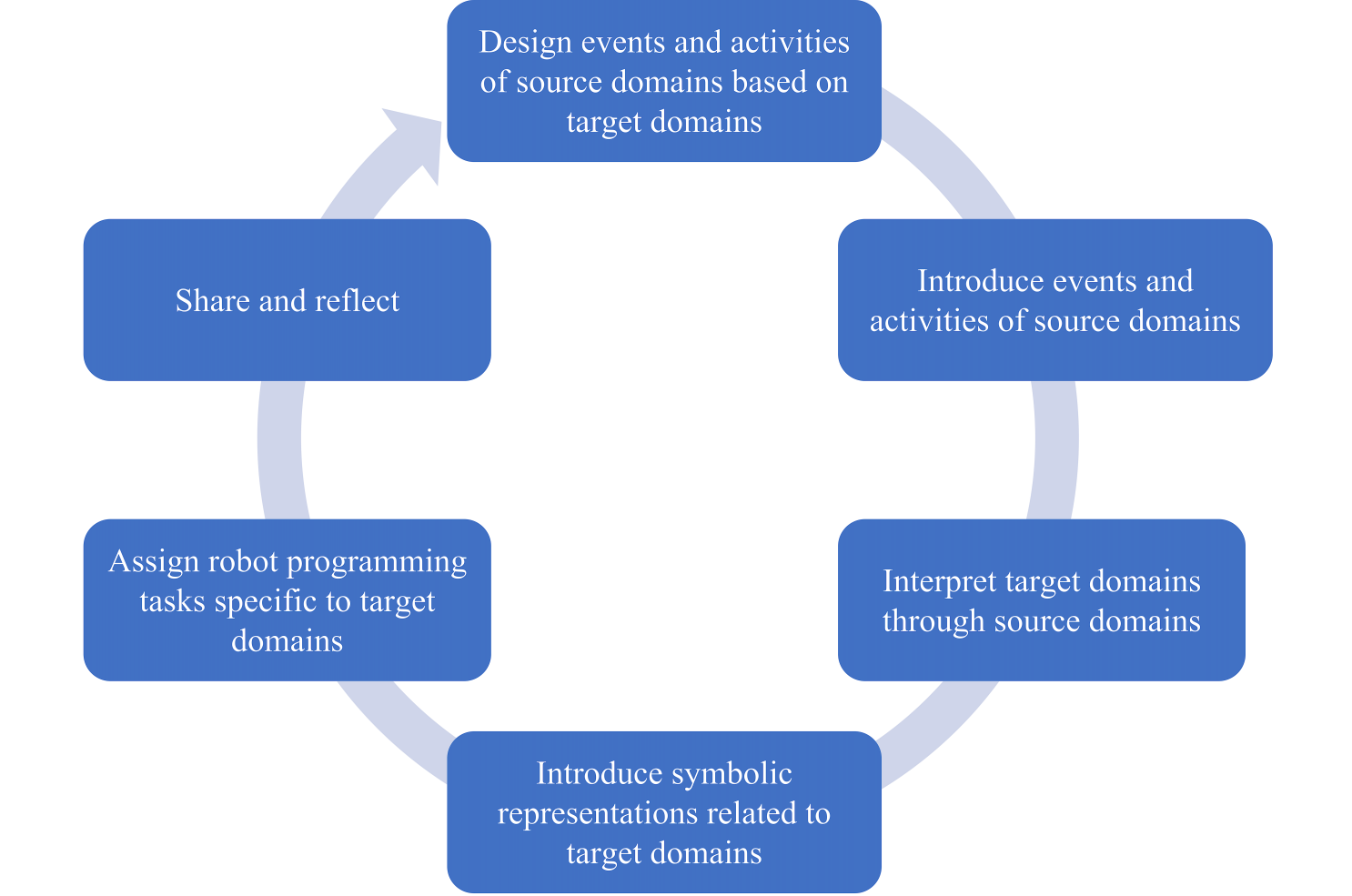
Fig. 2 The teaching process of the MRP approach
The first phase is designing events and activities of source domains based on target domains. Metaphors involve the target domain and the source domain, where the source domain is the projection of the target domain (MacCormac, 1990; Saban, 2006). In this phase, the teacher determines abstract CT concepts (target domains) involved in robot programming learning and designs appropriate and learner-centered source domain events and activities specific to the features of target CT concepts. The design principle of the source domain should be learner-centered, that is, it should either be closely linked with children’s daily life contexts or be associated with existing knowledge that they have learned and clearly understood (Angeli & Giannakos, 2020; Manches et al., 2020; Peelle, 1983). In this study, an expert panel including two educational technology researchers and two experienced early childhood STEM teachers was assembled to discuss and decide on the events and supporting activities of the source domains. Table 1 displays the overview of the target domains and source domains designed in this study.
Table 1. An overview of designed target domains and source domains in this study.
| Target domain | Source domain |
| Algorithm/sequence: solving a problem logically with a series of sequential steps (Bers, 2018; Brennan & Resnick, 2012). | The steps of washing clothes: the concept of algorithm/sequence is explained by “the steps of washing clothes” metaphor: a boy faced a big problem when he found his clothes got dirty after playing football. So, he wanted to wash his dirty clothes. Does he wash them out of step? He should wash them step by step: take off his clothes, open the door of the washing machine, wait for some time, get the clean clothes... Just like the boy washes his clothes according to specific steps, the algorithm/sequence is to solve certain problems step by step in a logical order. |
| Representation: understanding that symbols represent concepts, instructions, etc. (Bers, 2018; Relkin et al., 2021). | The commands of the traffic lights and signposts were used as a metaphor to teach the representation concept. When driving a car and meeting with the traffic lights/signposts on the road, the traffic lights/signposts will express signals or instructions to us. Each signal or instruction represents a specific command. We need to recognize the commands of the traffic lights/signposts, such as stop, move forward, turn left, and turn right, and then follow the commands. Likewise, when we meet with instructions in the program, we need to recognize the specific commands or actions and follow them. |
| Loop: an associated concept of control structure that refers to repeating the same instruction multiple times until a condition is reached, sometimes equal to repeat (Bers, 2018; Brennan & Resnick, 2012). | A carousel was selected as a metaphor to explain the concept of loops: when we take the carousel at the theme park, it will rotate again and again; for example, it will not stop until a condition of 20 times is reached. Likewise, the loop repeats the same command over and over again until a condition is fulfilled. |
| Debugging: recognize the wrong part and try to solve and fix it (Bers, 2018; Relkin et al., 2021). | The metaphor of fixing a broken car was used to illustrate the debugging concept. When the car cannot work properly, we need to find the broken part, think about the reasons, and try to repair it until it returns to normal. Just like that, debugging is the process of trying to find the fault and proceeding to refine it until it is right. |
The second phase is introducing events and activities of source domains. In this phase, the teacher introduces the designed events and activities of the source domain, which aims to enable children to recall and be aware of the concepts related to their daily life contexts or well-understood knowledge. Then, the teacher guides them to extract features of source domains, which aims to lay a solid foundation for the following learning of abstract CT concepts. Take the loop concept as an example. First, the teacher displayed the pictures of a carousel on the screen and interacted with the class: “Have you ever seen or taken a carousel before?” Afterwards, the teacher played a video of children on a carousel and guided them to notice and understand the way the carousel works and its features (Fig. 3): “Do you know how the carousel works? Will the carousel go on and on?”. For example, one child said: “It will rotate again and again.” After interacting with the children, the teacher illustrated: “When we take the carousel at the theme park, it will rotate repeatedly, and it will not stop until a condition of 10 times is reached.”
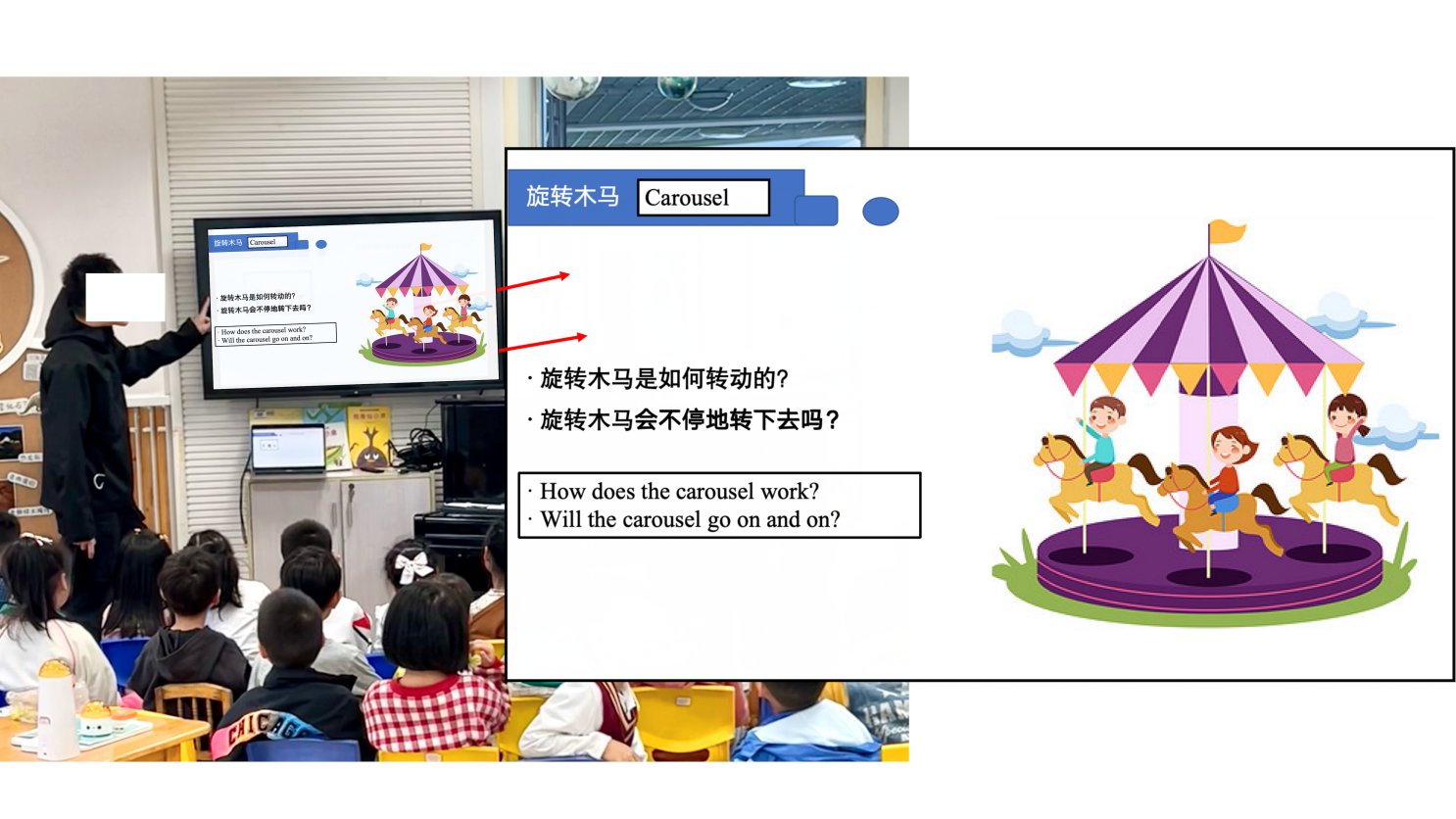
Fig. 3 The teacher introduced the events and activities of a carousel to the class
The third phase involves interpreting target CT concepts through source domains. In this phase, the teacher interprets target CT concepts by guiding children to notice similarities between target CT concepts and source domains, so as to help them understand and grasp the target CT concepts well (Peelle, 1983). Take the loop concept as an example. First, the teacher introduced the loop concept to the class: “We have just learned how the carousel works. In just the same way as the carousel works, the loop repeats the same command over and over again until a condition is fulfilled.” Afterwards, the teacher guided the children to notice similarities between the carousel (source domain) and loop (target domain): “Do you find any similarity or same features between the carousel and the loop?” For example, one child responded: “The carousel rotates repeatedly while the loop also repeats over and over again.”
The fourth phase involves introducing symbolic representations related to target domains. As each programming block represents one specific instruction (Bers et al., 2019; Relkin et al., 2021), in this phase, the teacher introduces programming instructions/blocks related to target CT concepts and interprets their functions and usages with cases to the class. Take the loop as an example. First, the teacher showed the loop programming blocks to the class: “As shown on the screen (Fig. 4), there are corresponding loop programming blocks in Matatalab programming kits: loop begin and loop end. What are their colors?” For example, one child stated: “They are green.” Then, the teacher interpreted their function and usage through cases: “Look, here is a piece of code sample (Fig. 4). As we learned that the loop repeats the same command over and over again until a condition is fulfilled, can you recognize the repeated instructions in this piece of code? How many times do they repeat?” After inviting some children to answer this question, the teacher interpreted their function and usage to the class.
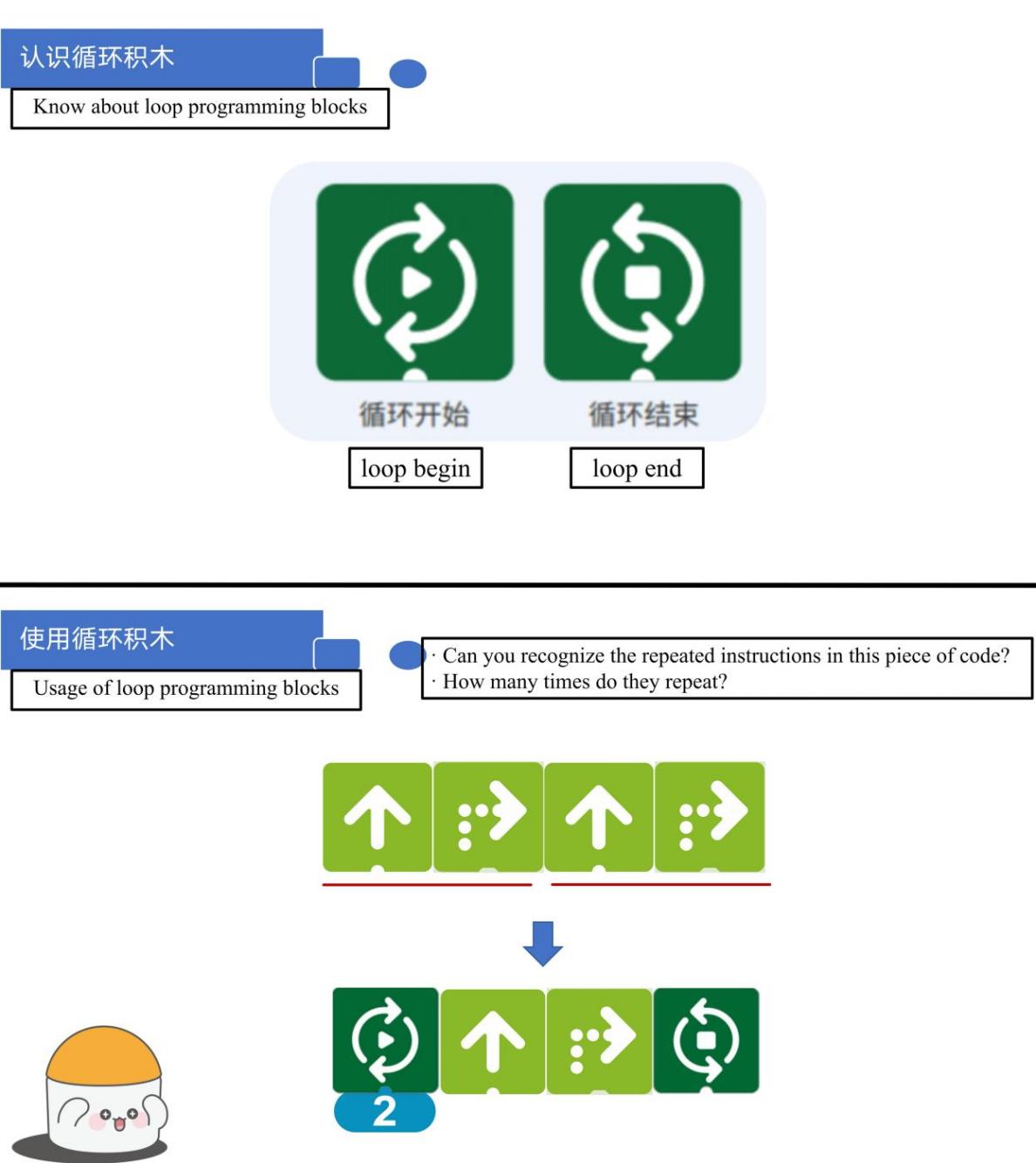
Fig. 4 The teacher introduced loop programming blocks to the class
The fifth phase involves assigning robot programming tasks specific to target domains. In this phase, the teacher assigns robot programming tasks specific to target domains of CT concepts and clarifies the requirements and objectives of the tasks to the children. According to the requirements and objectives of the tasks, children collaborate with their peers to design solutions, write and execute programs, and use the target CT concepts to complete problem-solving tasks. Meanwhile, the teacher observes children’s performance during the process and provides assistance if they need help. Take the case of the loop concept as an example again: the teacher showed the corresponding programming problem-solving tasks to the children: “As shown on the screen (Fig. 5), the MatataBot will go around today. We have just learned about loops and will use them to solve the robot programming tasks. Please help the MatataBot to achieve the goal.” Fig. 6 shows the children engaged in the programming problem-solving task with peers.
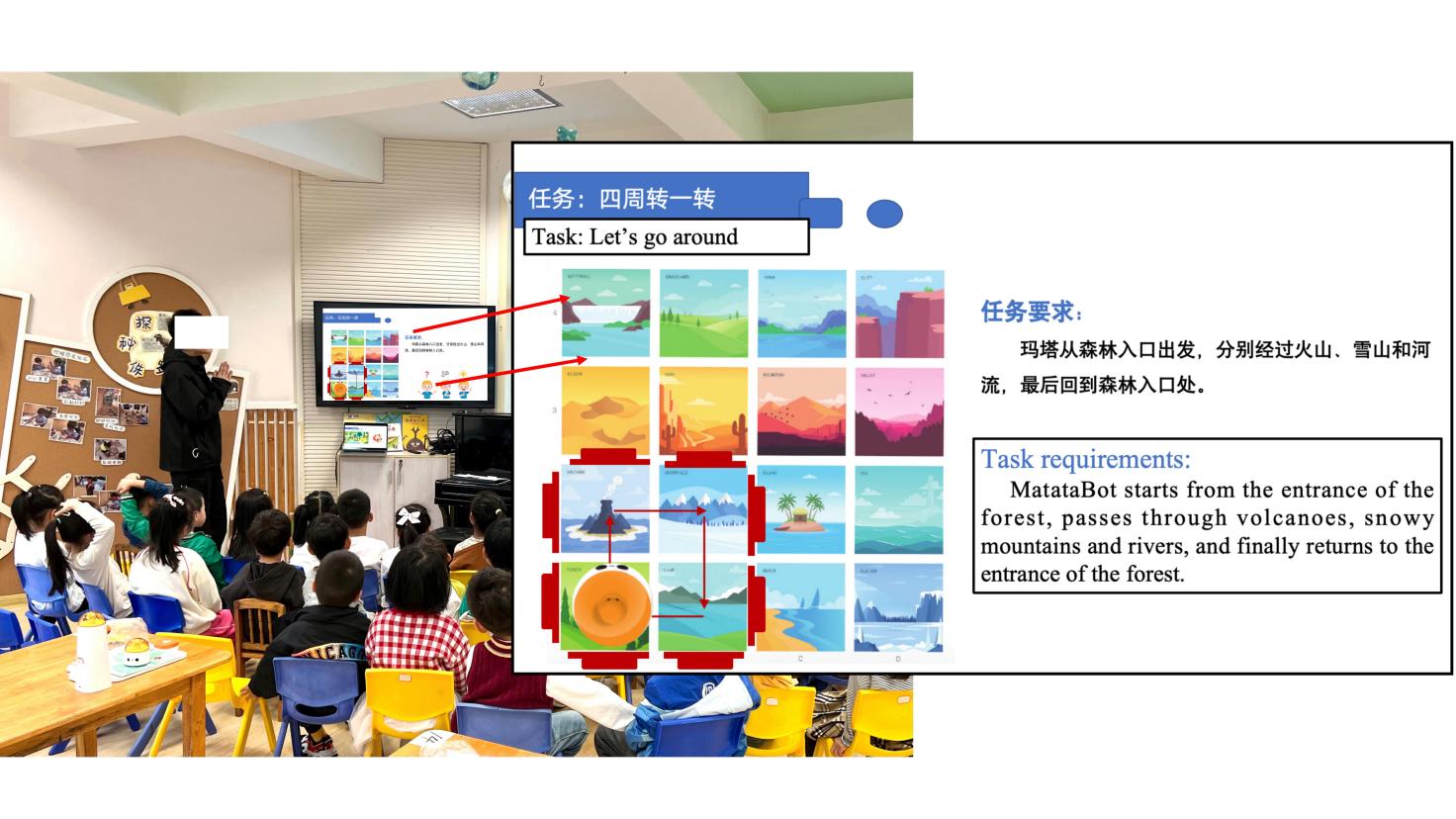
Fig. 5 The teacher assigned robot programming tasks to children
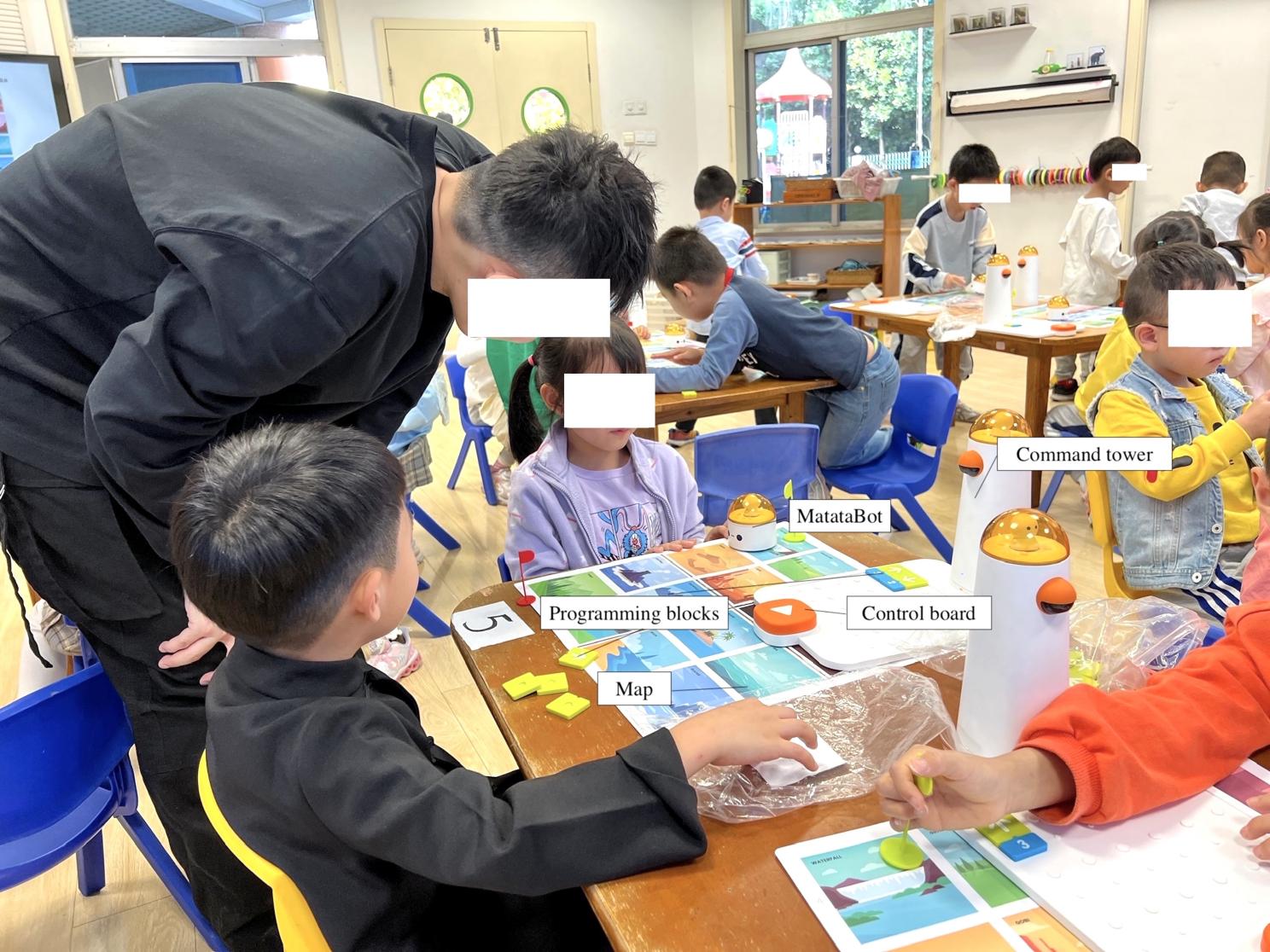
Fig. 6 The children engaged in the programming problem-solving task with peers
The sixth phase involves sharing and reflecting. In this phase, the teacher organizes children to share their robot programming works and problem-solving solutions. After sharing, the teacher provides children with feedback on their process performance, works, or solutions and makes a conclusion about this lesson. Then, the children reflect on and refine their works and solutions.
4. Experimental design
4.1 Participants
A quasi-experimental design was employed in this study. The inclusion criterion for participants was that they should have no previous relevant training experience. A total of 118 children aged 5-6 (Mean = 5.71 years) were voluntarily recruited from one public kindergarten in eastern China. Sixty children (32 boys and 28 girls) were randomly assigned as the experimental group, and 58 (29 boys and 29 girls) as the control group. The experimental group used the MRP approach, while the control group used the CRP approach. There were no significant differences in the demographic variables (i.e., age and gender), p > 0.05. The study protocol followed the Declaration of Helsinki and was approved by the ethics committee of the researchers’ institution. In addition, informed consent was obtained from parents, teachers, and children.
4.2 Implementation fidelity
In this study, efforts were made to ensure high implementation fidelity: first, both groups were taught by the same experienced and well-trained teacher. The teacher engaged in three rounds of 2-hour professional training workshops to familiarize himself with the robot programming tool, curriculum content, metaphor scripts, and so on; second, the teacher was required to make reflections every week; lastly, each session of the two groups was video-recorded and was evaluated by the primary researchers.
4.3 Measuring tools
4.3.1 Computational thinking test
An unplugged CT test TechCheck-K was adapted to assess the young children’s CT. It was developed by Relkin and Bers (2021) specifically for young children based on the six dimensions of powerful ideas: hardware/software, algorithm, representation, modularity, control structure, and debugging. TechCheck-K includes 15 items and does not require respondents’ prior experience of programming. As reported by Relkin and Bers (2021), TechCheck-K has acceptable psychometric properties (criterion validity at r = 0.76). In this study, its Cronbach’s α was .78, reaching good internal reliability. To better facilitate its administration and record its results, the items of TechCheck-K were converted to a digital version on Qualtrics. For consistency, assessors were convened for a roughly 2-hour training session. The assessors administered the formal test to the children individually in a quiet and open multifunctional room.
4.3.2 The coding scheme for children’s learning behaviors
To better capture the children’s learning behaviors, the development of the coding scheme included the following stages. First, according to previous representative literature (Sun et al., 2021; Zhan et al., 2022), an initial coding framework was synthesized. Based on the initial coding scheme and the classroom video clips, a preliminary review was conducted on a small-scale sample of children from both groups and examined whether all behavioral features were captured. After that, a panel including three experts in related fields was assembled to discuss the suitability of the coding scheme. Finally, the coding scheme was refined according to the feedback. Two experienced coders carried out the coding session. The inter-rater reliability Kappa value was 0.82, indicating acceptable consistency. Any discrepancies were solved through discussion to reach a consensus. Table 2 shows the coding scheme for children’s learning behaviors.
Table 2. Coding scheme for children’s learning behaviors.
| Code | Behavior | Description |
| LT | Listen to the teacher | Children listen to the instructor during the class. |
| IT | Interact with the teacher | Children answer questions or give feedback to the teacher. |
| DP | Discuss with peers | Children discuss with partners the learning activities, programming solutions, and opinions. |
| WP | Write the program | Children plan the routes and place the programming blocks. |
| EP | Execute the program | Children push the launch button and execute the program. |
| AH | Ask for help | Children ask the teacher or other group members for help. |
| DE | Debug | Children check instruments, programming blocks, steps, or routes, and attempt to refine their solutions. |
| ET | Extend the task | Children try other solutions or extend tasks by themselves after they finish the given tasks. |
| SH | Share | Children share their solutions or tasks with the teacher or peers. |
| IB | Irrelevant behaviors | Children chat, play, or exhibit other irrelevant behaviors. |
4.4 Experimental procedure
The experimental procedure is shown in Fig. 7. After recruiting participants, children were required to complete the 15-minute pre-test of CT. Subsequently, a 10-week robot programming curriculum (40 minutes per week) was carried out in the kindergarten science classroom. The experimental group used the MRP approach that integrated metaphors into robot programming teaching. The control group used the CRP approach that focused on conventional narration-based robot programming teaching. At the end of the intervention, both groups were assessed immediately with the CT posttest.
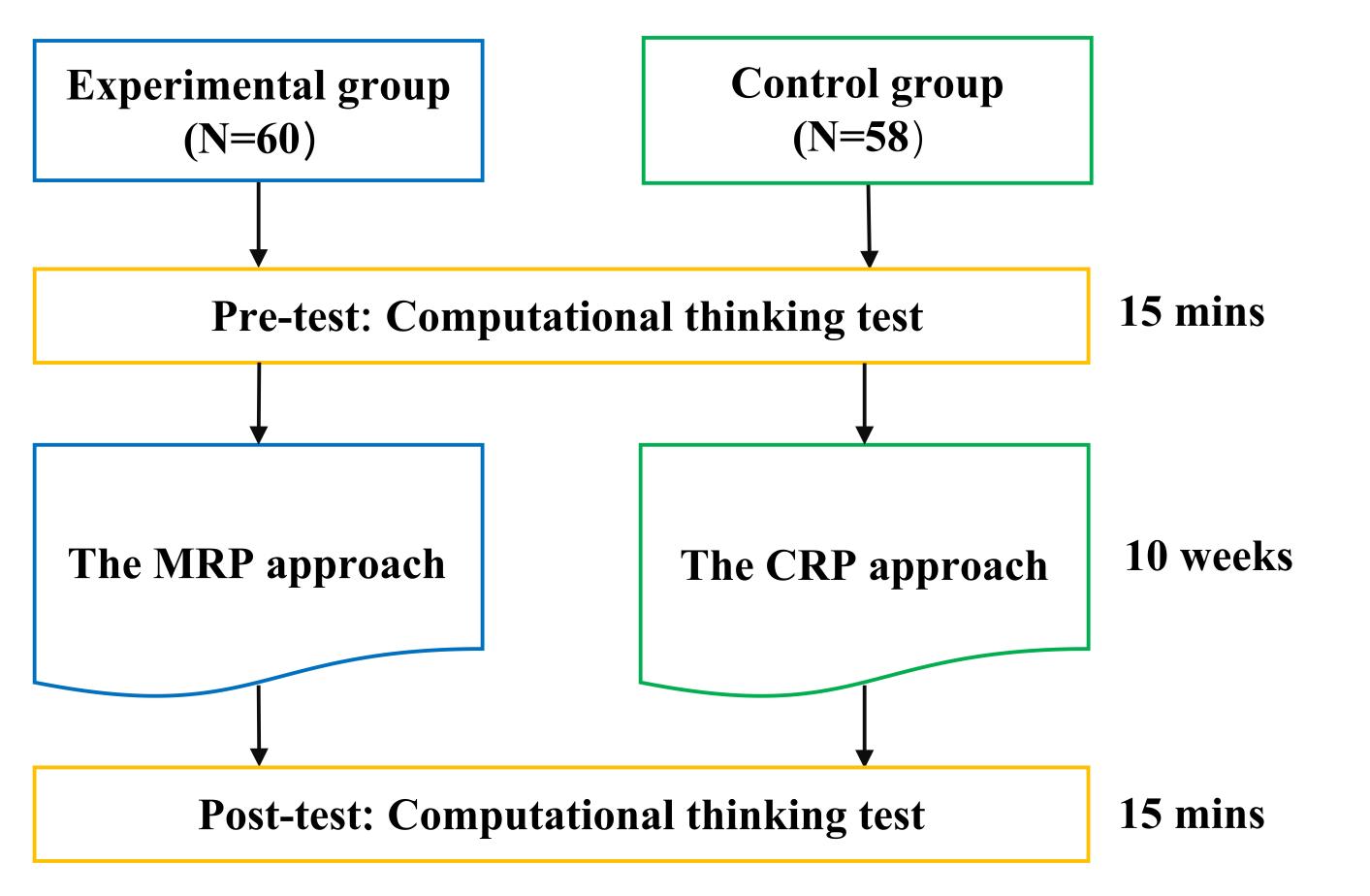
Fig. 7 The experimental procedure
4.5 Data analysis
To address RQ1, the one-way analysis of variance (ANCOVA) was performed to investigate differences in the CT posttest scores of the young children in the two groups by controlling their CT pretest scores. A p-value smaller than 0.5 was set to be significant in our study. All data were analyzed using the SPSS 26.0 software.
To address RQ2, children’s classroom performances were video-recorded, and two representative activity sessions in the late period were deliberately selected to code the two groups’ learning behaviors because by then the children were more familiar with the adopted teaching methods. Based on the coding scheme and videos, two researchers coded the children’s behaviors. When a child performed a specific behavior, the researchers recorded it (Bakeman & Gottman, 1997). Lag sequential analysis (LSA) was used to analyze children’s learning behaviors through the GSEQ software. A Z score greater than 1.96 represents a significant relationship. Then, the learning behavior conversion diagrams were drawn to compare the two groups’ behavioral patterns.
5. Results
5.1 Analysis of children’s computational thinking
The result of Shapiro-Wilk tests showed that all data collected in this study were approximately normally distributed (p > 0.05). Fig. 8 shows the box plot of the overall CT mean scores of the pretest and posttest by groups.
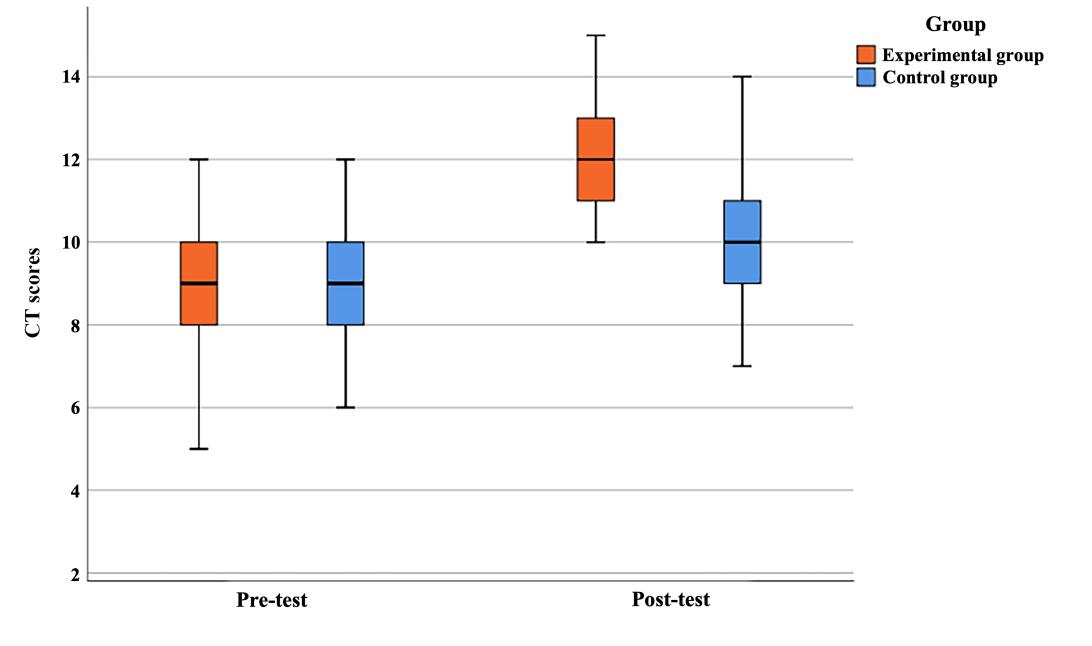
Fig. 8 The box plot of the overall CT mean scores of the two groups in the pretest and posttest
ANCOVA was performed to compare children’s posttest scores, controlling for their CT pretest scores (Table 3). The result (F = 1.39, p = .242 > .05) of Levene’s test for equality of variances showed no significant level, specifying that the assumption of the homogeneity of variances in the groups was satisfied. Therefore, the ANCOVA could be performed for later analysis. The ANCOVA result showed that there was a significant difference in children’s posttest CT scores after controlling for their pretest CT scores (F = 40.29, p < .001, η2 = 0.26). The adjusted means and standard errors of children’s posttest CT scores in the experimental group were 11.98 and 0.19, while those with the control group were 10.33 and 0.18. It was found that the posttest CT scores in the experimental group were higher than those of the control group, suggesting that the MRP group outperformed the CRP group on CT.
Furthermore, ANCOVA was performed to analyze each dimension of CT. The results showed that significant differences were reached between the two groups in four dimensions of CT, that is, algorithm/sequence (F = 26.80, p < .001, η2 = 0.17), representation (F = 5.90, p < .05, η2 = 0.04), control structure (F = 5.17, p < .05, η2 = 0.04), and debugging (F = 20.28, p < .001, η2 = 0.11), implying that the MRP approach could be more conducive to facilitating children’s learning of algorithm/sequence, representation, control structure (covering loops), and debugging than the CRP approach.
Table 3. The results of ANCOVA for posttest CT scores of the experimental and control groups.
| Dimension | Group | N | Mean | SD | Adjusted Mean | Std. error | F | η2 |
| Overall | Experimental | 60 | 11.95 | 1.48 | 11.98 | 0.19 | 40.29*** | 0.26 |
| Control | 58 | 10.36 | 1.77 | 10.33 | 0.18 | |||
| Hardware/software | Experimental | 60 | 1.67 | 0.48 | 1.66 | 0.06 | 0.07 | 0.00 |
| Control | 58 | 1.64 | 0.48 | 1.64 | 0.06 | |||
| Algorithm/sequence | Experimental | 60 | 3.77 | 0.87 | 3.73 | 0.12 | 26.80*** | 0.17 |
| Control | 58 | 2.84 | 1.04 | 2.88 | 0.12 | |||
| Representation | Experimental | 60 | 1.37 | 0.55 | 1.30 | 0.06 | 5.90* | 0.04 |
| Control | 58 | 1.02 | 0.44 | 1.08 | 0.06 | |||
| Modularity | Experimental | 60 | 1.52 | 0.50 | 1.54 | 0.06 | 0.56 | 0.00 |
| Control | 58 | 1.50 | 0.50 | 1.48 | 0.06 | |||
| Control structure (covering loop) | Experimental | 60 | 1.88 | 0.32 | 1.91 | 0.04 | 5.17* | 0.04 |
| Control | 58 | 1.79 | 0.41 | 1.77 | 0.04 | |||
| Debugging | Experimental | 60 | 1.75 | 0.44 | 1.83 | 0.05 | 20.28*** | 0.11 |
| Control | 58 | 1.57 | 0.50 | 1.49 | 0.05 |
* p < 0.05; *** p < 0.001
5.2 Analysis of children’s learning behavioral patterns
The frequencies and percentages of the children’s coded behaviors in the two groups are shown in Fig. 9. A total of 998 event codes were collected from the experimental group, and 968 were obtained from the control group. In the MRP experimental group, the most frequent behaviors were WP (i.e., writing the program, 15.6%), DP (i.e., discussing with peers, 15.2%), and LT (i.e., listening to the teacher, 14.0%). Children in the control group performed more IB (i.e., irrelevant behaviors, 16.5%), WP (i.e., writing the program, 12.4%), and DP (i.e., discussing with peers, 11.8%). In comparison, more irrelevant behaviors (e.g., chatting, distraction, or playing) appeared in the control group.
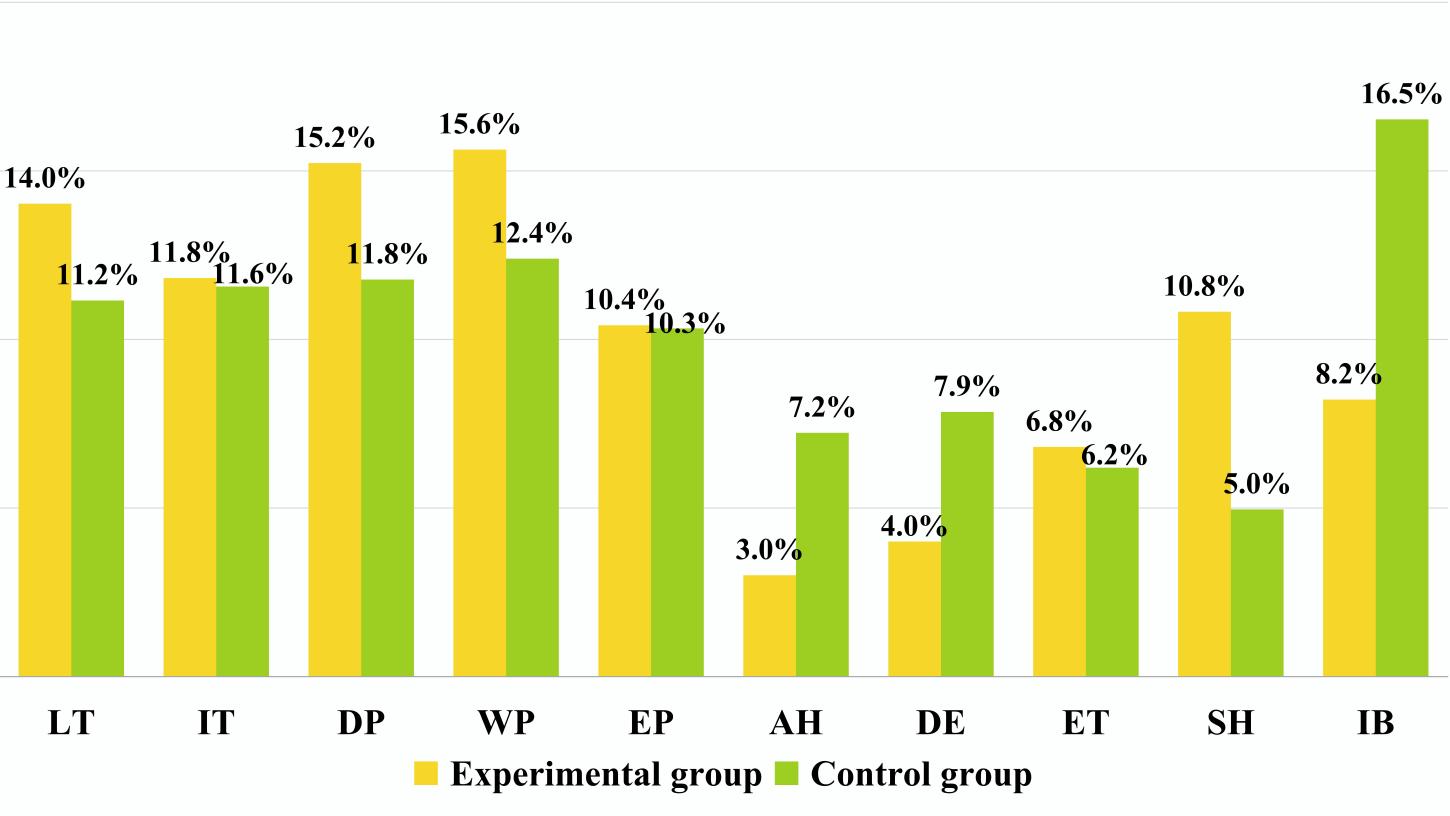
Fig. 9 Percentages of coded behaviors in the two groups
According to the adjusted residuals tables for the two groups shown in Tables 4 and 5, respectively, there were 16 significant sequences obtained in the MRP experimental group, while 23 significant behavioral sequences were found in the control group.
Table 4. The adjusted residuals tables for the experimental group.
| Given | LT | IT | DP | WP | EP | AH | DE | ET | SH | IB |
| LT | -5.05 | 14.62* | 4.93* | -1.91 | -4.26 | -2.20 | -2.55 | -3.38 | -4.35 | 1.23 |
| IT | 17.85* | -3.00 | -2.70 | -3.52 | -2.79 | -1.44 | -1.67 | -2.21 | -2.85 | -0.43 |
| DP | -3.77 | -3.41 | -3.95 | 15.07* | -3.18 | -1.64 | -1.90 | -2.02 | 0.81 | 0.88 |
| WP | -3.88 | -3.52 | 1.41 | -3.80 | 17.70* | 4.80* | -1.96 | -2.60 | -3.35 | -2.88 |
| EP | -3.08 | -2.79 | 1.66 | -3.28 | -2.60 | 2.09* | 8.90* | -0.90 | 5.36* | -0.68 |
| AH | -1.59 | -1.44 | -0.94 | 4.08* | -1.34 | -0.69 | 7.22* | -1.06 | -1.37 | -1.18 |
| DE | -1.80 | -1.63 | -1.88 | -1.91 | -1.52 | 1.96 | -0.91 | -0.27 | 8.99* | 0.37 |
| ET | -1.42 | -1.28 | -0.67 | -1.51 | -1.20 | -0.62 | -0.72 | -0.95 | 9.13* | -1.05 |
| SH | -2.28 | -2.07 | -2.39 | -2.43 | -1.93 | -0.99 | -1.15 | 12.67* | -1.97 | 5.85* |
| IB | 5.28* | -2.45 | 1.25 | -1.98 | -2.28 | -1.18 | -1.37 | 5.31 | -1.28 | -2.00 |
* Z > 1.96
Table 5. The adjusted residuals tables for the control group.
| Given | LT | IT | DP | WP | EP | AH | DE | ET | SH | IB |
| LT | 0.00 | 11.58* | -0.89 | 2.33* | -4.09 | -3.29 | -3.45 | -2.99 | -2.64 | 0.02 |
| IT | 7.64* | 0.00 | -3.09 | 0.03 | -2.85 | -2.29 | -2.40 | -2.08 | -1.84 | 3.60* |
| DP | -3.21 | -3.09 | 0.00 | 5.16* | 8.53* | -2.32 | -0.40 | -2.10 | 1.99* | -3.87 |
| WP | -3.32 | -3.20 | 7.96* | 0.00 | 3.01* | 2.74* | -2.51 | -2.17 | -1.92 | -1.27 |
| EP | -2.96 | -2.85 | -0.69 | -2.98 | 0.00 | 7.45* | 6.97* | -1.94 | -1.03 | 0.18 |
| AH | -2.24 | -2.16 | 0.60 | -2.25 | 3.34* | 0.00 | 9.96* | -1.46 | -1.29 | -2.70 |
| DE | -2.32 | -2.24 | -2.26 | -2.34 | -1.51 | 3.85* | 0.00 | 7.52* | 5.38* | -0.96 |
| ET | -1.62 | -1.56 | -1.58 | -1.63 | -1.45 | -1.17 | -1.23 | 0.00 | 8.36* | 3.76* |
| SH | -1.35 | -1.30 | -1.31 | -1.36 | -1.21 | -0.97 | -1.02 | 4.08* | 0.00 | 4.43* |
| IB | 6.16* | -0.83 | -0.52 | -0.35 | -3.23 | -2.60 | -2.72 | 4.97* | -1.50 | 0.00 |
* Z > 1.96
The transition diagram of significant behavioral sequences of the two groups is shown in Fig. 10 and 11, respectively. The black lines imply significant sequences happening simultaneously in the two groups, whereas the red lines represent important sequences that only exist in the experimental or control group. As demonstrated in Fig. 10, children in the experimental group repeatedly listened to and interacted with the teacher (LT→IT→LT), followed by discussion with peers (LT→DP) in the instructional process. After discussing with their peers, the children attempted to write the programs, and then fewer children would ask for help (WP→AH), while more children would execute their work (WP→EP). When children completed the execution tasks, some turned to debugging and then sharing works (EP→DE→SH), while others directly turned to sharing (EP→SH). Surprisingly, the children in the experimental group repeatedly shared and extended the learning tasks (SH→ET→SH). This showed that learning programming with metaphors in the experimental group helped the children to grasp the basic concepts and skills, as they could complete the programming assignments without much help and even spontaneously extend the tasks.
From Fig. 11, it was found that children in the control group, except for those engaged in the instructional process (LT→IT→LT), would exhibit some irrelevant behaviors (IT→IB→LT), either because some could not understand the abstract concepts or because they were not interested in this way of learning. In the sessions of writing the programs, the majority of children would like to discuss with peers repeatedly (WP→DP), while some children would execute programs (WP→EP) or ask for assistance (WP→AH). Afterwards, they tended to repeatedly ask for others’ help in the execution (AH→EP→AH) or debugging (AH→DE→AH) processes. This seems to indicate that it could have been hard for the control group to complete the programming assignments on the occasions without others’ help. In addition, the children would share after debugging or extending tasks (DE→SH, ET→SH). Moreover, the control group would perform several irrelevant behaviors after they extended and shared tasks (ET→IB, SH→IB).
Furthermore, from the red lines in Fig. 10, four behavioral patterns reached a significant level only for the experimental group. That is, the children would like to discuss with their peers after they listened to the teacher (LT→DP). AH→WP means they would continue to write the program after asking for help from their peers or the teacher. The ideal situations are EP→SH and SH→ET: Children would execute the program and then turn to share their work rather than ask for help or debugging, or they would extend their learning tasks after sharing. Based on the red lines in Fig. 11, there are 10 couples of special significant sequences in the control group. LT→WP represents the children listening to the teacher and then writing the program. WP→DP, DP→EP, and DP→SH mean children would discuss with peers after they write the program and then execute the program or perform sharing. DE→ET represents children trying to debug and then extend tasks. Nevertheless, there are some inadequate situations: AH→EP and EP→AH show that children would repeatedly ask for help and execute the program; then IT→IB and ET→IB show that they would perform irrelevant behaviors after they interacted with the teacher or extended tasks.
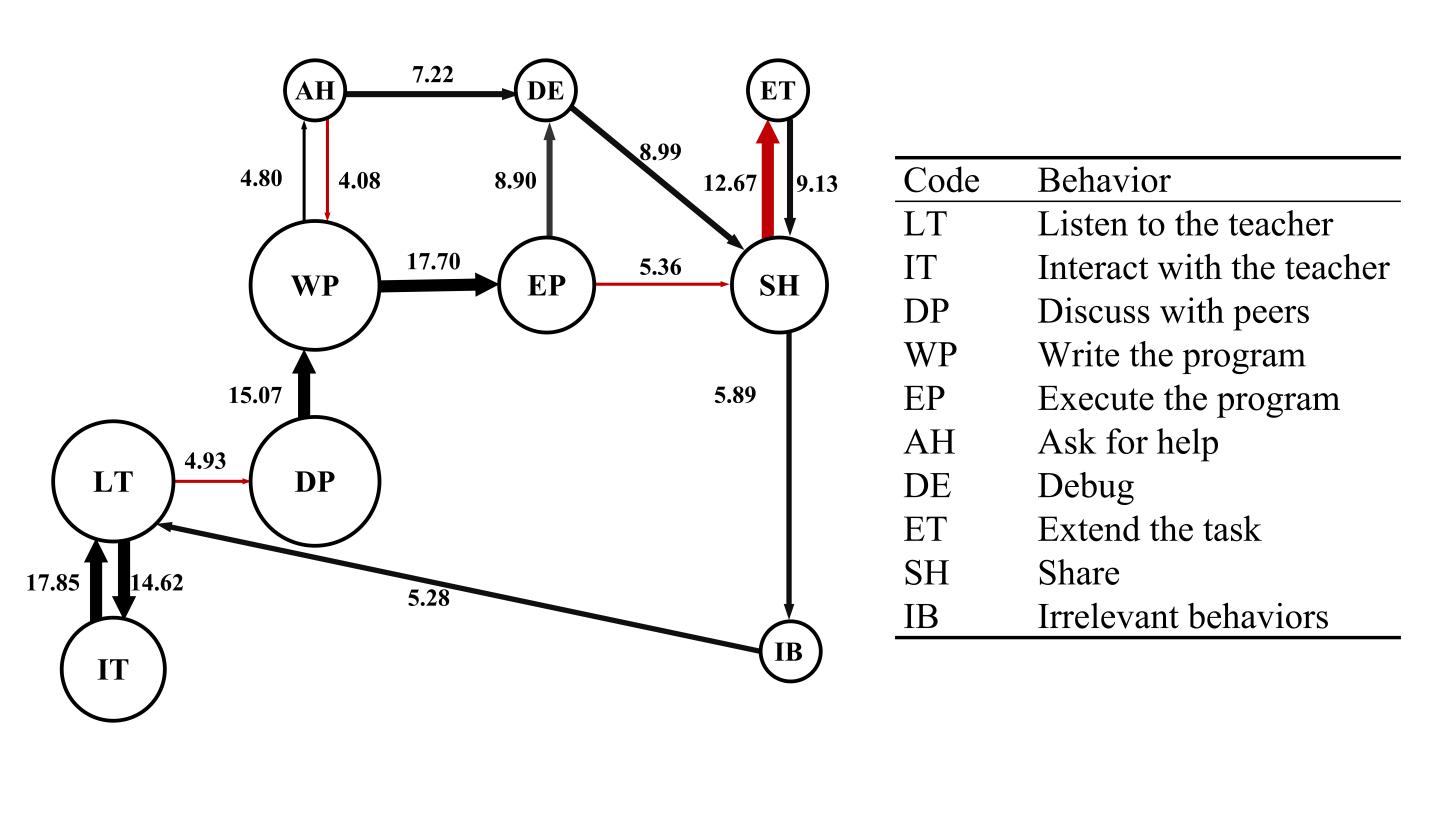
Fig. 10 The transition diagram of significant behavioral sequences of the experimental group
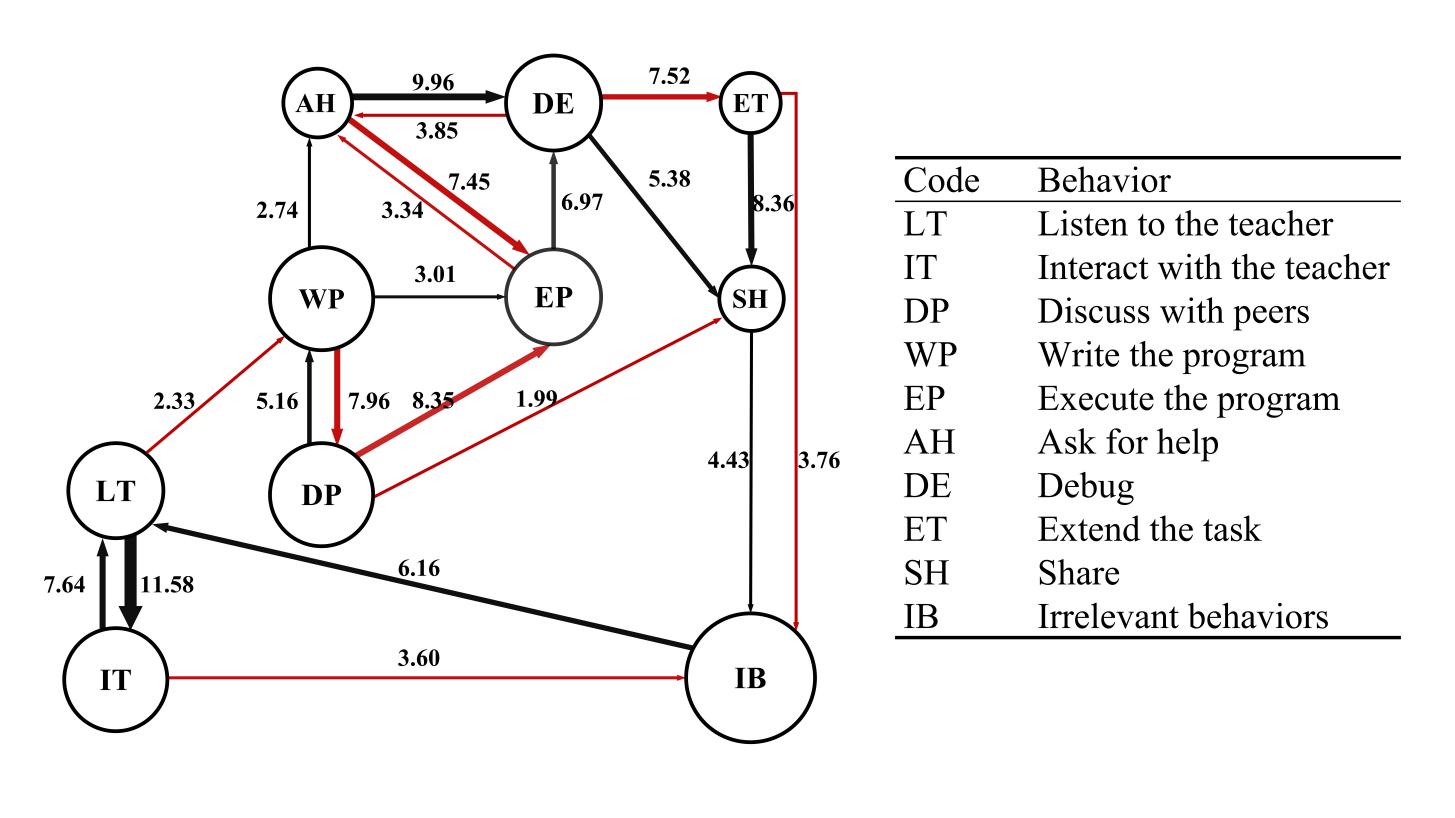
Fig. 11 The transition diagram of significant behavioral sequences of the control group
6. Discussion and Conclusions
In light of previous literature indicating that metaphors can be effective pedagogical facilitators, a metaphor-based robot programming approach was proposed to cultivate young children’s CT. A study using a quasi-experimental design was conducted to explore the impact of the proposed MRP approach on young children’s CT and behavioral patterns. A total of 118 children aged 5-6 years old participated in a 10-week intervention via one of the two conditions: the experimental group adopted the MRP approach, while the control group used the CRP approach. The results showed that children who participated in the MRP group outperformed those in the CRP group in CT. In addition, behavioral analysis indicated that the proposed MRP approach could facilitate children’s superior learning performance and more positive behaviors, so as to help them achieve the learning objectives.
In response to research question one, the experimental group outperformed the control group in overall CT, suggesting that the proposed MRP approach could better enhance young children’s CT than the CRP approach. Further, the results showed that the experimental group outperformed the control group in algorithm/sequence, representation, control structure, and debugging, indicating that the MRP approach could be more conducive to facilitating children’s learning in algorithm/sequence, representation, control structure (covering loops), and debugging than the CRP approach. This finding aligned with the results of Milner’s (2010) and Pérez-Marín et al.’s (2018, 2020) research that learners’ CT can be enhanced by providing metaphors in programming learning. Theoretically, metaphors involve mapping between relatively abstract concepts (target domains) with simpler or clearer concepts that are rooted in life experience (source domains) (Lakoff & Johnson, 1980; Reinhardt, 2020; Thomas & McRobbie, 2001). They are helpful instructional tools that aim to build linkages between abstract concepts and concrete content that closely connect to learners’ existing knowledge and life experiences, which can help learners’ learning transfer from well-known concepts to unknown concepts and better facilitate learners’ learning achievement and learning performance (Pérez-Marín et al., 2018, 2020; Reinhardt, 2020; Yee, 2017). In this study, we designed learner-centered metaphors, such as the steps of washing clothes, carousels, and so on to illustrate the abstract CT concepts based on children’s life experiences and kindergarten learning content. Unlike traditional robot programming teaching based on illustrating CT concepts through narrations, providing metaphors in robot programming teaching allows the teacher to guide children to perceive and notice the similarity between target CT concepts and source domain events. Meanwhile, young children could better understand and master corresponding CT concepts and transfer them to problem-solving tasks in robot programming, thereby developing their CT (Pérez-Marín et al., 2020; Saban, 2006). Conceptual knowledge constructions of children in the preoperational stage depend on more concrete and familiar experiences to construct abstract concepts (Piaget, 1953, 1971). Learning Transfer of Constructivism also highlighted the significance of learning transfer by connecting existing learning experiences and knowledge with target abstract concepts (Duffy & Jonassen, 1991; Prenzel & Mandl, 1993). Hence, providing metaphors to young children follows theories of children’s cognitive development and the Learning Transfer of Constructivism. These might be possible reasons why the experimental group could better facilitate their CT than the control group. Therefore, if metaphors could be provided in robot programming teaching, it would effectively facilitate the development of young children’s CT.
In response to research question two, by comparing the two groups’ behavioral patterns based on the lag-sequential analysis results, children who engaged in the MRP group performed different behavioral patterns from children who engaged in the CRP control group. Specifically, there are three main findings synthesized from the behavioral patterns of children in the experimental group: (1) they tended to be more concentrated on the instructional process; (2) they were more engaged in completing programming tasks; and (3) more children devoted themselves to extending or sharing learning tasks after the required tasks. The following possible reasons might explain this phenomenon: when teaching robot programming for children, the provision of metaphors could help teachers build a linkage between abstract CT concepts and vivid and concrete content that closely connects to the children’s existing knowledge and life experiences (Milner, 2010; Peelle, 1983; Thomas & McRobbie, 2001). Therefore, the children could perceive, understand, and construct the corresponding CT concepts well and then transfer and apply them to complete problem-solving tasks of robot programming (Pérez-Marín et al., 2018, 2020). In addition, in terms of more children performing positive behaviors of extending or sharing learning tasks after the required tasks (Bers et al., 2019), we could infer that the MRP approach could enrich children’s programming learning experiences and stimulate children’s skill transfer ability and divergent thinking. As for the CRP control group, three main findings could also be concluded: (1) they were more bewildered by the problem-solving tasks; (2) children in the control group more repeatedly turned to ask for help with debugging the programs; and (3) they more often performed irrelevant behaviors during the class, similar to Zhan et al.’s (2022) finding. The behavioral patterns of the control group could also reflect the problems in conventional robot programming and CT education that children might have difficulties understanding and mastering the basic concepts and try to ask for help or underperform in learning tasks if no proper pedagogical approach were provided (e.g., Critten et al., 2021; Relkin et al., 2021). As the analysis and comparison of children’s learning behaviors can provide qualitative data to evaluate the effectiveness of the proposed teaching methods (Hwang et al., 2017, 2021), it can be inferred that the proposed metaphor-based robot programming approach could facilitate children’s superior learning performance and more positive behaviors, so as to help them achieve the learning objectives.
7. Contributions and implications
First, this study makes a contribution regarding the pedagogical approach to programming and CT education for young children. In conventional robot programming teaching, there were challenges for young children to learn some abstract programming and CT concepts. Our study proposed the MRP approach and verified its effectiveness in terms of developing young children’s CT. Pérez-Marín (2020) found that using metaphors in screen-based programming could enhance fourth- to sixth-graders CT. This study also extended previous findings that integrating metaphors in robot programming learning could promote young children’s CT. Therefore, educational practitioners should be well-trained to apply the MRP approach effectively.
Second, owing to the limited research on children’s behaviors in programming learning, a coding scheme for children’s learning behaviors was developed to explore their learning behaviors in robot programming settings in this study. Compared to children’s learning achievement, the analysis of learners’ behaviors focused more on children’s performance in the learning process. The data were more dynamic and persuasive than the provision of mere quantitative data by conventional tests (Hwang et al., 2017). The coding scheme and findings can be a baseline for future research. In general, this study provides insightful guidance and inspiration for future research on effective programming teaching and CT development for young children.
7. Limitations and future studies
The limitations of this study are as follows. First, the participants in this study were recruited from one kindergarten in eastern China, which might not be suitable for inferring the results for children with different backgrounds. Second, this study was implemented on a limited intervention period without evaluating the long-term effects of interventions. Based on the findings and discussions, several suggestions are provided for follow-up studies:
Future works can seek to expand the age groups and diversity of participants to explore the possibility of using the MRP approach to foster learners’ CT.
As present and prior research has used metaphors to teach children CT in robot and screen-based programming settings, future works can compare the effect of metaphors in different programming environments on children’s CT. In addition, more turns of CT assessment can be considered to explore the long-term impacts of the metaphor-based programming approach on children’s CT.
As this study revealed the effectiveness of the MRP approach in terms of children’s CT, it is suggested that future research can explore the effects of the MRP approach on children with different characteristics (e.g., gender, programming experience, etc.).
Other researchers can design more learner-centered metaphors based on daily problem-solving scenarios that align with children’s interests and cognitive development.
It is worth noting that children in the two groups exhibited more or less irrelevant behaviors during the learning procedure. Hence, how to promote children’s self-regulation or engagement in robot programming learning is worth exploring.
As research on children’s programming and CT education is still in its early stage, future work can continue to develop more effective programming teaching approaches to develop children’s CT.
References
Angeli, C., & Giannakos, M. (2020). Computational thinking education: Issues and challenges. Computers in Human Behavior, 105, 106185. https://doi.org/10.1016/j.chb.2019.106185
Angeli, C., & Valanides, N. (2020). Developing young children’s computational thinking with educational robotics: An interaction effect between gender and scaffolding strategy. Computers in Human Behavior, 105, 105954. https://doi.org/10.1016/j.chb.2019.03.018
Arfé, B., Vardanega, T., & Ronconi, L. (2020). The effects of coding on children’s planning and inhibition skills. Computers & Education, 148, 103807. https://doi.org/10.1016/j.compedu.2020.103807
Bakala, E., Gerosa, A., Hourcade, J. P., & Tejera, G. (2021). Preschool children, robots, and computational thinking: A systematic review. International Journal of Child-Computer Interaction, 29, 100337. https://doi.org/10.1016/j.ijcci.2021.100337
Bakeman, R., & Gottman, J. M. (1997). Observing interaction: An introduction to sequential analysis (2nd ed.). Cambridge: Cambridge University Press.
Bas, M., & Gezegin, B. B. (2017). Metaphors of English as a foreign language. Global Journal of Foreign Language Teaching, 7(1), 2–8. https://doi.org/10.18844/gjflt.v7i1.2403
Bati, K. (2021). A systematic literature review regarding computational thinking and programming in early childhood education. Education and Information Technologies, 27(2), 2059–2082. https://doi.org/10.1007/s10639-021-10700-2
Bers, M. U. (2018). Coding as a playground: Programming and computational thinking in the early childhood classroom. New York and London: Routledge.
Bers, M. U. (2019). Coding as another language: A pedagogical approach for teaching computer science in early childhood. Journal of Computers in Education, 6(4), 499–528. https://doi.org/10.1007/s40692-019-00147-3
Bers, M. U., Flannery, L., Kazakoff, E. R., & Sullivan, A. (2014). Computational thinking and tinkering: Exploration of an early childhood robotics curriculum. Computers & Education, 72, 145–157. https://doi.org/10.1016/j.compedu.2013.10.020
Bers, M. U., González-González, C., & Armas-Torres, M. B. (2019). Coding as a playground: Promoting positive learning experiences in childhood classrooms. Computers & Education, 138, 130-145. https://doi.org/10.1016/j.compedu.2019.04.013
Bers, M. U., Strawhacker, A., & Sullivan, A. (2022). The state of the field of computational thinking in early childhood education. OECD Education Working Papers. http://dx.doi.org/10.1787/3354387a-en
Brennan, K., & Resnick, M. (2012). New frameworks for studying and assessing the development of computational thinking. In Proceedings of the 2012 annual meeting of the American educational research association, Vancouver, Canada, 1-25. Retrieved from https://web.media.mit.edu/~kbrennan/files/Brennan_Resnick_ AERA2012_CT.pdf.
Critten, V., Hagon, H., & Messer, D. (2021). Can pre-school children learn programming and coding through guided play activities? A case study in computational thinking. Early Childhood Education Journal, 50(6), 969–981. https://doi.org/10.1007/s10643-021-01236-8
CSTA. (2011). Operational definition of computational thinking for K–12 education. Retrieved from http://www.csta.acm.org/Curriculum/sub/CompThinking.html.
Di Lieto, M. C., Inguaggiato, E., Castro, E., Cecchi, F., Cioni, G., Dell’Omo, M., et al. (2017). Educational Robotics intervention on Executive Functions in preschool children: A pilot study. Computers in Human Behavior, 71, 16–23. https://doi.org/10.1016/j.chb.2017.01.018
Duffy, T. M. & Jonassen, D. H. (1991). Constructivism: New implications for Instructional technology? Educational Technology, 31(5), 7-12
Fain, M. A. (2001). Metaphors for learning: A cognitive exercise for students. Research Strategies, 18(1): 39–48. https://doi.org/10.1016/S0734-3310(02)00066-6
Feldman, D. H. (2004). Piaget’s stages: The unfinished symphony of cognitive development. New Ideas in Psychology, 22, 175–231. https://doi.org/10.1016/j.newideapsych.2004.11.005
Fu, C., Hao, X., Shi, D., Wang, L., & Geng, F. (2023). Effect of coding learning on the computational thinking of young Chinese children: Based on the three-dimensional framework. Education and Information Technologies. https://doi.org/10.1007/s10639-023-11807-4
Grover, S., & Pea, R. (2013). Computational thinking in K-12: A review of state of the field. Educational Researcher, 42(1), 38–43. https://doi.org/10.3102/0013189x12463051
Heintz, F., Mannila, L., & Farnqvist, T. (2016). A review of models for introducing computational thinking, computer science and computing in K-12 education. 2016 IEEE Frontiers in Education Conference (FIE). http://dx.doi.org/10.1109/fie.2016.7757410
Hwang, G. J., Hsu, T. C., Lai, C. L., & Hsueh, C. J. (2017). Interaction of problem-based gaming and learning anxiety in language students’ English listening performance and progressive behavioral patterns. Computers & Education, 106, 26–42. https://doi.org/10.1016/j.compedu.2016.11.010
Hwang, G. J., Tung, L. H., & Fang, J. W. (2022). Promoting students’ programming logic and problem-solving awareness with precision feedback: A two-tier test-based online programming training approach. Journal of Educational Computing Research, 60(8), 1895–1917. https://doi.org/10.1177/07356331221087773
Hwang, G. J., Wang, S. Y., & Lai, C. L. (2021). Effects of a social regulation-based online learning framework on students’ learning achievements and behaviors in mathematics. Computers & Education, 160, 104031. https://doi.org/10.1016/j.compedu.2020.104031
Kwon, K., Jeon, M., Zhou, C., Kim, K., & Brush, T. A. (2022). Embodied learning for computational thinking in early primary education. Journal of Research on Technology in Education, 1–21. https://doi.org/10.1080/15391523.2022.2158146
Lakoff, G. & M. Johnson. (1980). Metaphors we live by. Chicago: University of Chicago Press.
Lakoff, G. (1993). Metaphor and Thought. London: Cambridge University Press. http://dx.doi.org/10.1017/cbo9781139173865.013
Larsson, A., & Stolpe, K. (2022). Hands on programming: Teachers’ use of metaphors in gesture and speech make abstract concepts tangible. International Journal of Technology and Design Education, 33(3), 901–919. https://doi.org/10.1007/s10798-022-09755-0
MacCormac, E. R. (1990). A cognitive theory of metaphor. Cambridge, MA: MIT Press.
Macrides, E., Miliou, O., & Angeli, C. (2022). Programming in early childhood education: A systematic review. International Journal of Child-Computer Interaction, 32, 100396. https://doi.org/10.1016/j.ijcci.2021.100396
Manches, A., McKenna, P. E., Rajendran, G., & Robertson, J. (2020). Identifying embodied metaphors for computing education. Computers in Human Behavior, 105, 105859. https://doi.org/10.1016/j.chb.2018.12.037
Merino-Armero, J. M., González-Calero, J. A., & Cózar-Gutiérrez, R. (2021). Computational thinking in K-12 education. An insight through meta-analysis. Journal of Research on Technology in Education, 54(3), 410–437. https://doi.org/10.1080/15391523.2020.1870250
Milner, W. W. (2010). A broken metaphor in Java. ACM SIGCSE Bulletin, 41(4), 76–77. https://doi.org/10.1145/1709424.1709450
Papert, S. (1980). Mindstorms: Children, computers, and powerful ideas. New York: Basic Books.
Peelle, H. A. (1983). Computer metaphors: Approaches to computer literacy for educators. Computers & Education, 7(2), 91–99. https://doi.org/10.1016/0360-1315(83)90020-9
Piaget, J. (1953). The origins of intelligence in the child. London: Routledge and Kegan Paul.
Piaget, J. (1971). Developmental stages and developmental processes. In D. R. Green, M. P. Ford, & G. B. Flamer (Eds.), Measurement and Piaget. New York: McGraw-Hill.
Prenzel, M., & Mandl, H. (1993). Transfer of learning from a constructivist perpective, In T. M. Duffy, J. Lowyck, D. H. Jonassen, & T. M. Welsh (Eds.), Designing Environments for Constructive Learning, Springer–Verlag Berlin Heidelber, 315–330.
Pérez-Marín, D., Hijón-Neira, R., & Martín-Lope, M. (2018). A methodology proposal based on metaphors to teach programming to children. IEEE Revista Iberoamericana de Tecnologias Del Aprendizaje, 13(1), 46–53. https://doi.org/10.1109/rita.2018.2809944
Pérez-Marín, D., Hijón-Neira, R., Bacelo, A., & Pizarro, C. (2020). Can computational thinking be improved by using a methodology based on metaphors and scratch to teach computer programming to children? Computers in Human Behavior, 105, 105849. https://doi.org/10.1016/j.chb.2018.12.027
Reinhardt, J. (2020). Metaphors for social media‐enhanced foreign language teaching and learning. Foreign Language Annals, 53(2), 234–242. https://doi.org/10.1111/flan.12462
Relkin, E., & Bers, M. (2021). TechCheck-K: A measure of computational thinking for kindergarten children. 2021 IEEE Global Engineering Education Conference (EDUCON). http://dx.doi.org/10.1109/educon46332.2021.9453926
Relkin, E., de Ruiter, L. E., & Bers, M. U. (2021). Learning to code and the acquisition of computational thinking by young children. Computers & Education, 169, 104222. https://doi.org/10.1016/j.compedu.2021.104222
Rijke, W. J., Bollen, L., Eysink, T. H. S., & Tolboom, J. L. J. (2018). Computational thinking in primary school: An examination of abstraction and decomposition in different age groups. Informatics in Education, 17(1), 77–92. https://doi.org/10.15388/infedu.2018.05
Saban, A. (2006). Functions of metaphor in teaching and teacher education: A review essay. Teaching Education, 17(4), 299–315. https://doi.org/10.1080/10476210601017386
Silvestre-López, A. J. (2022). Uses and functions of conceptual metaphor in pedagogical meditation discourse. ELUA, 38, 47–72. https://doi.org/10.14198/elua.22349
Sun, D., Ouyang, F., Li, Y., & Zhu, C. (2021). Comparing learners’ knowledge, behaviors, and attitudes between two instructional modes of computer programming in secondary education. International Journal of STEM Education, 8(1). https://doi.org/10.1186/s40594-021-00311-1
Sun, L., Hu, L., & Zhou, D. (2022). The bidirectional predictions between primary school students’ STEM and language academic achievements and computational thinking: The moderating role of gender. Thinking Skills and Creativity, 44, 101043. https://doi.org/10.1016/j.tsc.2022.101043
Thomas, G. P., & McRobbie, C. J. (2001). Using a metaphor for learning to improve students’ metacognition in the chemistry classroom. Journal of Research in Science Teaching, 38(2), 222–259. https://doi.org/10.1002/1098-2736(200102)38:23.0.CO;2-S
Wing, J. M. (2006). Computational thinking. Communications of the ACM, 49(3), 33–35. https://doi.org/10.1145/1118178.1118215
Yang, W., Ng, D. T. K., & Gao, H. (2022). Robot programming versus block play in early childhood education: Effects on computational thinking, sequencing ability, and self‐regulation. British Journal of Educational Technology, 53(6), 1817–1841. https://doi.org/10.1111/bjet.13215
Yee, S. P. (2017). Students’ and teachers’ conceptual metaphors for mathematical problem solving. School Science and Mathematics, 117(3–4), 146–157. https://doi.org/10.1111/ssm.12217
Zhan, Z., He, W., Yi, X., & Ma, S. (2022). Effect of unplugged programming teaching aids on children’s computational thinking and classroom interaction: With respect to piaget’s four stages theory. Journal of Educational Computing Research, 60(5), 1277–1300. https://doi.org/10.1177/07356331211057143
Zhang, X., Chen, Y., Bao, Y., & Hu, L. (2023a). Robot illustrated: Exploring elementary students’ perceptions of robots via the draw-a-robot test. Journal of Research on Technology in Education, 1–26. https://doi.org/10.1080/15391523.2023.2232058
Zhang, X., Chen, Y., Li, D., Hu, L., Hwang, G. J., & Tu, Y. F. (2023). Engaging young students in effective robotics education: An embodied learning-based computer programming approach. Journal of Educational Computing Research, 62(2), 532–558. https://doi.org/10.1177/07356331231213548